Friday, August 8, 2014

Biophysics Week 3

Would you support the development of a “bionic” person?

I find this to be a tricky topic, because the main reason of concern is replacing humans. While a bionic person can be very useful, say in doing things/chores that seem daunting to the every day person, they are now starting to dabble in human intelligence. Eventually, will everything just be computers?  I think using a bionic person for things that generally can go wrong due to human error (such as surgeries, building parts, etc) are good, I'm cautious to see how much further the development of a bionic person will go. Will our children be cared for by bionic nannies? It's interesting yet still scary to think about, but I don't doubt that is what the future may hold. Especially since we're becoming so dependent on technology. Personally, I'm not for or against the development of it, just....cautious.
What is your opinion of the issues raised in the article “Could this $300 headset transform the lives of 'locked-in' patients?”
 
Since I haven't really known anyone that has had to deal with ALS or someone they knew, I can't really imagine the difficulty and turmoil that one would experience day to day. It's such an unfortunate thing, and the fact that they basically become "locked-in" is upsetting, because there's nothing that can really be done for them. Until now with this headset. I think it's great that there's something being worked on to help those with ALS to communicate, but i do believe there are still many flaws. There seems to be more hesitance on it versus confidence, and I wander if it's also because many of the families are willing to do anything to help. Of course, this doesn't come cheap at all, so it really is only for the selected few that are able to afford it. Ideally, it seems like a wonderful device.  But realistically, there's been nothing that proves it works.

Biophysics Week 2


Acupuncture as effective energy medicine

I agree with this statement wholeheartedly. Being in school for TCM, I don't think it's possible to disagree with this. We've all experienced the energy and power of a what needles can do to the body, even if for just a short amount of time.  The needles channel your body's energy, and even the practitioners. That's why you wouldn't want to go to an acupuncturist who doesn't have good qi and is weak, because you won't get better. Qi is such a important component of health, and we're taught that with low amounts of it, you can't really be healthy. I think that looking at your whole body as a whole versus just the symptoms is much more effective, and benefits you in the long run. That's the advantage of TCM versus western medicine. In order to fix a symptom, you must see what's the root of that system. 

What conclusions can you draw from Kirlian photography

Overall, I think that Kirlian photography is such an interesting thing! The fact that using a high frequency, high voltage, and low-amperage-electrical field shows the auras of people or objects in a photograph is remarkable. While there's no mystery as to how these auras are photographed, the exact science of what is being photographed is still up for interpretation.  The future of kirlian photography seems promising, and a great alternative/supplement in diagnostic medicine! 

Human intent as it affects health

In TCM, we learn that our intention is such a huge component of medicine. As we're placing the needle into a patient, we should have good intention: our minds should be clear, we should be focused, and we shouldn't be thinking of anything but that moment where the needle is being inserted into. Intention is everything, and without good intention it won't yield good results. Even with regular medicine, we learn that the mind is such a powerful tool. That's why there's the placebo effect. If you really believe that something will work (or not work), then there's a good possibility your body will go into that mindset and physically do whatever it needs to do.

Tuesday, August 5, 2014

Biophysics Week 1

I know I’m a “living system” because…….

When I think of living systems, I automatically think of oxygen, carbon dioxide, breathing, and food. Living systems require these things to survive, and without them, they're considered not living. While some systems may be more complex than others, human  beings are the most complex in our world.  I also think that non living systems don't have an impact on others, while living systems do. If the smallest living system, such as plankton, were to become non existent, then the entire food chain would be extinct. It would affect every single thing including humans, and our planet as we know it would be non-existant.

Biophysics and Traditional Chinese Medicine
I feel like as TCM becomes more popular, it's constantly being compared to biophysics, which is essentially all things western medicine. I think it's a pivotal point in time because as TCM becomes more popular, it'll change (in either a positive or negative way). While on one hand, it will encourage more people to try acupuncture and create more job opportunities which is a good thing. However, I think it will also cause a shift in how TCM will work. If it becomes regulated, practitioners will have to conform to western ways and may be restricted in some of the things, such as prescribing certain herbs. I think overall it's a good thing that they're being integrated, but it's still a question of if or what will change. 

Tuesday, July 22, 2014

Week 9

My E-Prime Day

I think I woke up at what is considered 9 in the morning to the residents of California.  I then walked from my bed to the room where there is a toilet, sink, and bathtub. I picked up an instrument that is named a toothbrush to the western world, and I used it to clean my teeth. I thought that it would be a wise decision to clean my laundry, so I proceeded to do so. I then thought it would be a good idea to grab a pan and cook food from the refrigerator while I waited for the laundry machine to be done completely with my clothes. After all of this, I got a few books from my classes and read them while taking notes. 

[Oh dear, this is horrible E-prime. And a lot tougher than I thought it'd be!]

How might you synthesize eastern and western ideas in Physics?

I think it's an interesting how we're constantly comparing eastern and western ideas in every way, so of course physics wouldn't be an exception.  I think using the science of western ideas and the philosophical eastern ideas with physics would be a good way to further compare the two. Overall, I think it's a complex idea...but not impossible to do (for someone of a higher caliber, of course). 

Monday, July 21, 2014

Week 8

Newton's Three Laws and Me

I think Newton's Three Laws can be applied to everyday life.

Law 1: An object at rest will remain at rest unless acted on by an unbalanced force. An object in motion continues in motion with the same speed and in the same direction unless acted upon by an unbalanced force. 

An everyday example of this is with ketchup! When you flip the bottle over and it's not full, it may just stick to the bottle and nothing will come out. However, if you hit it, the ketchup will come out. Me hitting it is the unbalanced force that makes it move from it's resting position. 

Law 2: Acceleration is produced when a force acts on a mass. The greater the mass the greater the amount of force needed. 

I think of driving. From the moment you start the car to getting on the highway and accelerating. You don't have to apply that much pressure to the gas when you're going 25 mph down Broadway, but if you're on the 580 you have to put more force to the pedal to accelerate.

Law 3: For every action there is an equal and opposite reaction

Everyday in class! When I sit in a chair, I'm exerting a downward motion on it and the chair is exerting an upward motion on me.


Our Energy Efficient Culture

Obviously, we are anything but energy efficient. At least in my opinion. We might be taking steps in that general direction, but they are baby steps. While we're trying to be more energy efficient, I can't help but wander how much we're helping, while at the same time how much damage we're doing. 

Descartes

Oh, Descartes. I feel like he was pretty much the whole package, even though he might not have been exactly right about a few things. But his ambition was there! I think it's interesting how he tried to simplify things by just grouping them together, which makes sense. But as others have discussed, it's obviously not the best thing to do. And Laura even mentioned how it's similar to Western Medicine, which I completely agree with. It shouldn't just be stuffed into a category, but other components of the body need to be taken into consideration.

Monday, July 14, 2014

Week 7

“Ordered chaos” – does this sound familiar?
  
Chaos is around us everywhere we look. From the streets to even my living room. I think that ordered chaos is scientists way of putting a grasp on the unexplainable.  In the western world, we like to solve and analyze everything, from medicine to math. Further understanding how the world can function in chaos is just a way to further examine how the world works.  When I think of ordered chaos, I think of a lot of people's houses/rooms. It may look like a mess to any other person, but to the person who's belongings are everywhere, they know exactly where everything it is.

Fractals as patterns of complex systems
 A fractal is a never-ending pattern. Fractals are infinitely complex patterns that are self-similar across different scales. They are created by repeating a simple process over and over in an ongoing feedback loop. Driven by recursion, fractals are images of dynamic systems – the pictures of Chaos.  While they're lovely to look at, the whole system behind them still confuses me.
 
Consciousness out of chaos?

As stated before, I think chaos is a constant factor in our lives. Even if it doesn't seem chaotic, it is. In a typical day, we do a lot of things! Grooming ourselves, eating, talking, listening, studying, working, etc. Time always goes forward, and we're constantly moving/thing about the next step.  While we might not be conscious of our every move that we make (breathing, blinking, etc) we should step back and try to make sense of the "chaos" that we're experiencing. 

 Experiments
I tried a few of the experiments but none of them really worked for some reason =(

Tuesday, June 24, 2014

Week 6

Are all vibrations “good”?
I'm not sure if vibrations should be categorized as good or bad. Vibrations themselves are just a thing, a phenomena that occurs repeatedly in different ways in nature.  What the vibrations themselves can do can cause good or bad, but I don't think all vibrations can be simply categorized into one group.  The vibration of an instrument will obviously create a much happier sound than a vibration from an earthquake. Some vibrations are healing, such as a medicine bowl, while others are painful. It depends on what's being caused in that moment, and how it's affecting those around it. 

Resonance in my world
I found the Resonance article to be terrifying. I couldn't imagine if I was the eyewitness! He's incredibly lucky to be alive, and I could only imagine what that felt like to experience. I think the part I would be most shocked about is that it wasn't due to poor infrastructure, but due to the resonance. It makes me a little wary about living in the Bay Area. I've never experienced any kind of earthquake, only hurricanes. So I'm hoping a major one doesn't strike anytime soon! 

Connections I can make between Energy and Qi
I think there's a very strong connection between energy and qi. To the average person, energy is just that feeling of being awake and able to do activity without getting tired or sluggish.  We explain qi in many different ways, but I describe it as a "sensation" when it's applied to acupuncture. I think qi is very similar to energy.  But how do we measure it, and how can others be convinced that there's a lack of or excess of it? I'm glad that western science is starting to prove that it is indeed a real thing, and not just something in our imagination! 

Week 5

My (a)symmetrical world
Like the majority of people, I find symmetrical things to be very pleasing to the eye.  Things that are asymmetrical tend to be less favored, and look...a little off (at least in my opinion).  We live in a world where symmetry is praised, from someone's face to how clothes look.  It transfers into conservation laws and how our world works, so it's understandable why we're so drawn to symmetry as human beings.  

Just what does this "CP violation" really mean?
CPT stands for "charge, parity, time" which is applied to the CPT theorem. The explanation of the theory is that all processes involving particles remain invariant if the particles are changed into antiparticles ("charge conjugation"), the system is reflected in a mirror ("parity change"), and time is run backward ("time inversion").  When experimenters change the charge and parity of particles in the kaon system, the decay rate changed.  In turn, this violated the CP. This is the only instance that nature showed CP violation, so physicists just accepted that this was the exception. 

Are there connections between Sacred Geometry and Physics?
Honestly, I think if people look hard, there's some kind of connection to everything.  Especially with physics, which is so broad, yet can be applied to everything in our daily lives.   It is interesting to see the reasoning behind matters of the world, such as chaos theory.  Or even earlier works of art. Maybe the sacred geometrists just did what they did because of the feeling that they had in that very moment. Or they could be on to something pertaining to the new world.  Regardless, physicists will continue to draw a connection to anything, and I think that each time there will be some kind of connection, big or small. But that's a given. 

Tuesday, June 10, 2014

Week 4

How has e=mcaffected you?

This formula is probably the most famous formula known: Energy = mass x (speed of light)2. This shows the relationship of mass to energy, so how could it not affect me?! With only 3 symbols, this equation is able to explain energy. Something so simple, yet so broad. It's used in every day life, and basically makes up the universe. I couldn't imagine life without e=mc2 because it's the sun and light! 

How would you compare the four “forces”?

I think the four "forces": gravity, electromagnetism, the weak nuclear force, and the strong nuclear force have little in common besides the fact that they govern every matter interaction.  I find that their name's are pretty much self explanatory.  Gravity is the force that we're the most familiar with. It's the weakest of the four forces but it has an unlimited range.  It depends on the mass of two bodies and the distance between them and the dominance of gravity is due to its range and constant attractive nature.  Electromagnetism is less than 1% of the strong force but has infinite range. It has an attractive and repulsive nature which can either come together or cancel out.  This is how atoms stay together.  The weak nuclear force operates on the extremely short distance scales found in an atomic nucleus responsible for radioactive decay. The strong nuclear force has a limited range to subatomic distances and keeps quarks together inside protons and neutrons. Basically, it glues particles together. 

What is the function of gravity?

The exact function of gravity? Does anyone know? We know what it does to us on earth and lack of it in space, but its function for working the way it does is still a mystery. The range is unlimited and effects everything, but can easily be overcome with a different force. One thing though, is that without gravity, things would definitely be up in the air! (...get it?) 

Tuesday, June 3, 2014

Week 3


* What evidence can you find for synchronicity

I think that synchronicity finds its way into our lives in many examples, big or small.  Receiving a text from a person you haven't talked to for months the instant that they pop into your head, or thinking about a song and having it play on the radio right when you turn it on. The most common example I find is getting a phone call from a family member or friend when you're suddenly thinking about them.  Or even meeting someone in an unexpected place. Is it an inner intuition? Coincidence? Or a combination of both? 


* Based on what you know, how would you explain connectivity? 

As I had a family friend once tell me, "we'll connected by six degrees of separation". I definitely find this true, especially if you're from the same town, be it big or small. You're bound to meet someone who knows someone that is a good friend of yours. I think everything is connected even in the slightest bit, whether or not they seem related. To explain what one thing connects all of us in the universe is a bit more difficult and complex, but knowing there's an underlying factor both physically and spiritually (at least in my opinion). 

Tuesday, May 27, 2014

Week 2

Uncertainty
The uncertainty principle has to quantities, position and momentum, that are the subject of the Heisenberg uncertainty principle.  It describes the precision with which these two quantities can be known for any object.  The definition of uncertainty is something that is not exactly known or if it is known, there's a slight bit of doubt to its exactness.  I feel that it's not only used in physics, but all subjects in or outside of school.  The universe is such a wide and open field filled with questions that cannot be answered. Yes, as time goes on more questions do get proven, but it's impossible to solve everything.  Uncertainty will never go away, and w'll always be left with that one bit of doubt or unknowingness.

Causality: 
Cause and effect! I think it's interesting...but maybe it's because as humans, we're looking to notice these correlations.  I think instances are bound to happen, and could be just a coincidence. Even just doing a bit of research online about causality opens up a lot of theories and gives more insight on the subject. It's quite fascinating!

Is the Universe Weird?
Yes! But how do we define weird? Is it something we can't explain? Strange? Funny? Out of place? It's a broad term, but I think it fits the universe. Then again...how do we define "normal?" Maybe it's the universe that's normal and WE'RE weird. The questions just keep continue.....

Monday, May 19, 2014

Week 1

Answers to this week's quiz:

1. How did I get here?
Prior to learning tcm, I don't have that much experience of it. My dad practices holistic medicine, so I've dabbled in different things here and there, but nothing concrete.  I moved to the bay area last June from Florida to attend ACCHS. I knew I wanted to study acupuncture in California due to the fact there was a different licensing exam and it seemed more rigorous. After deciding between where I wanted to live (the bay area or San Diego), I settled on the bay area and really liked the vibes I got from ACCHS.

2. What do I think about physics honestly?
The only physics I've had is in high school my senior year where I took Advanced Placement physics. I took it mainly because of the teacher, but I remember the information being way over my head. Even after the term was over, I didn't really process that much of it. I was terrified of taking it in undergrad since there low passing rate, but luckily my major didn't require it. I feel physics is just math with added variables to make it that much harder.

3. Have you ever experienced time speeding up or slowing down?
I feel that time speeds up when I'm spending limited time with family and friends, such as a vacation or family get together. I feel it slowing down when I'm late for school or an appointment and the bart is taking it's sweet old time. It's funny how whenever we need time on our side, it tends to speed up and go by quicker.


Reflections on this week's class:

I found this week's class topic very interesting! One of the articles that caught my attention was Hall's description on M-time versus P-time, which compared Western monochronic time to Eastern Polychronic time. I found it amusing that many of the comparisons were able to be related and true! I think that in the western world, we're much more focused on individualism versus groups, and this translates to how we work and our outcome of that. Whether or not one way is better is difficult to say, but I believe the western way is much more stressful and detrimental to our health. Time in general is a very interesting concept, and to view it in different perspectives is definitely eye opening!

Monday, April 14, 2014

Week 14

I have mixed feelings on Artificial Intelligence.  I feel that as a society, we can really benefit from the technology that machines and robots can do without the mistake of human error, such as surgeries as someone had mentioned in class.  But what is the need/want for these machines to have the capability to imitate human emotions and thoughts? Maybe I'm just wary since I've seen too many sci-fi shows, but sometimes depending too much on these machines can lead to our downfall

Debunking Captivity: 3 Reasons Not to Keep Dolphins in a Tank

Aw, this article makes me sad. I know that having any kind of animal locked up for viewing or "research" isn't necessarily the best thing for them, but the researchers always say it's for the animals best interest, such as they were hurt. However, I'm guilty of going to amusement parts when I was younger and the dolphins were my favorite thing to see! I was fascinated with them! When I swam with them on a family vacation I thought it was awesome. But looking back, I feel so bad. As the article states, they're not there for our enjoyment and entertainment.  We view them as such intelligent creatures, but don't bother assessing our treatment of them. I agree that dolphins deserve rights and should be treated as who rather than what.

Saturday, April 12, 2014

Week 13

"...The human species if living as if it had more than one planet to occupy..."

I completely agree with this quote! We're using resources left and right to just build more and more. It's gotten to the point where we're over consuming tremendously, and being the humans that we are, we just keep going and going, rarely thinking of the consequences that could happen.  Rather than being concerned with our surroundings and the effects that could happen, humans tend to live in the present and are just thinking out we could further benefit from the things around us.

Nanobionics aims to give plants superpowers
I found this article to be interesting, but a little disturbing as well. While I'm sure the intentions of creating bionic plants are good, it's just yet another way of messing with mother nature. Do we really know the consequences of these actions down the road? Maybe we won't see the effects immediately, but they could happen in the next hundred years and make a negative impact on the ecosystem. While I encourage technology and new findings, I'm still apprehensive on creating new genes for alive plants and animals.

Tuesday, April 1, 2014

Week 12

I found it interesting to learn about the different units of radioactivity.  The becquerel, sievert, and curie are units that are all brand new to me.  It's a bit difficult to fully process in such a short amount of time, but how it was broken down made it understandable.  And I was shocked to find out bananas are radioactive! One of my favorite fruits!

I looked at http://micro.magnet.fsu.edu/cells/virus.html and I find it interesting the whole structure of a virus.  It's often something that we just hear about and we only experience virus' as a whole versus thinking of it as an individual thing.  We see the effects that it can have on living organisms.  It also discussed the 2 most common viruses that people often think of: influenza and HIV

Briefly glancing at the other sites, I like how the pictures are illustrated. It breaks it down into visuals that are easy to understand and labels each part!

Tuesday, March 25, 2014

Week 11

An interesting topic that I found that we discussed in class was the placebo article.  The fact that "most family doctors had given the placebo drug to at least one of their patients" was a new discovery, at least for me. While I initially thought this was a horrific find, after hearing everyone else's opinion on the subject of placebo's in general, I can see the pros and cons to both sides. For some, it really is a mind thing, and if taking a pill will make them better, then I don't see the harm. On the other hand, if it is a severe illness, then giving a patient a pill to test this theory out is controversial.  However we look at it, there needs to be research done on the study of placebos, and there's no other way to really test the effects without human subjects.

Wednesday, March 12, 2014

Nail polish

The Chemicals 
 
A common beauty supply that females use on their fingernails and toenails. There's a variety of colors, textures, and shine. To create these formulas, chemicals are used. The main ingredient is nitrocellulose, a long-lasting film forming agent derived from cellulose. Interesting fact: it was used for automobile paint! There's adhesive polymers that make sure the nitrocellulose sticks to the nail.  Camphor is embed between polymer chains to make the polish flexible. Pigments are added. Ulraviolet stabilizers help ensure that the colors don't change in the sunlight, and butyl acetate helps leave behind the pigmented color on the nail when it dries.

The Allegations

Cancer
Birth defects
Asthma
Reproductive problems
Due to “toxic trio –
Toluene
a clear, colourless liquid commonly used in nail polish as well as in paints, thinners and inks. It gives nail polish that nice smooth finish and helps everything to dry quicker.
causes symptoms of headache, dizziness, fatigue and irritated eyes, nose and throat. Toluene has also been found to be toxic to the kidneys and liver and possibly a reproductive disruptor. It's of particular concern to pregnant women since it’s transmitted to the fetus via the placenta and then onto the infant through breast milk.
Formaldehyde
nail hardener and helps stop polish from chipping.
an irritant to the eyes, nose and throat. Breathing in the fumes often leads to coughing and wheezing, while exposure through contact to the skin results in rashes and other skin irritations. Other symptoms can include headaches, fatigue, dizziness and immune dysfunction.
Dibutyl phthalate
acts as a plasticizer, adding flexibility and sheen
linked to birth defects and damage to reproductive organs
 
Nail Polish Alternatives (3 free)
 
Butter London
Chanel
China Glaze
CHI
Colorpops
Lippman Collection
L’Oréal USA
NailTini
OPI Products
Orly International
Rescue Beauty Lounge
Revlon
Sally Hansen
Seche
SpaRitual
Suncoat
Zoya
 

Week 9

pH Balance: Acid & Alkali & Anti-Oxidants

I think the American diet is anything but healthy. Our diets have become more processed with additives and chemicals, less nutritional, greasier, fattier, and our physical activity has decreased. With a richer diet, less physical activity, and increased stress, it's a no brainer that are bodies are in high oxidation. To combat these acidic foods, alkaline foods can be integrated. The article discusses the types of food that are alkaline and rates them on a number scale.  I was quite surprised at some of the high alkalinity of the foods, such as lemons. I'm also glad to see that red wine may help prevent disease and cancer ;)  This is an interesting site that brings awareness to the every day American diet. While changes don't have to be drastic, but tweaks here and there can make a difference!

Tonight's discussion

I thought the chemical cookbook article was informative and helpful in balancing equations.  It broke it down into steps that were easy to understand. Learning about acidic and alkaline foods was interesting as well! I think a healthy, balanced diet overall will greatly improve a person's physical and mental health.

Tuesday, March 4, 2014

Week 8

Chemicals under my kitchen sink: 


Displaying photo.JPG 

There's draino for the bathroom, furniture polish, unopened kaboom, window cleaner, and lysol all purpose cleaner.  The one that I use the most is the lysol all purpose cleaner. I use it for the stove, counter tops, table,and bathroom. Even then, I try to just wipe crumbs and things with a rag and water, unless its something that is sticky or dealing with raw meat.  The rest aren't really used so they stay under the sink.

Mediterranean diet 'better than low fat diet' for cardiovascular risk

I think this is an excellent article! It's very interesting because it goes against what society sees.  Rather than focusing on just no or low fat foods, the Mediterranean diet is based on increasing fruits, vegetables, whole grains, pasta, and fish and just eating less meat and vegetable and plant oils.  Reduced cholesterol levels doesn't mean reduce cardiovascular disease. This whole diet is more beneficial because it provides monosaturated fats that actually lower cholesterol. However, I feel that people would rather eat "easy" foods that are pre-packaged and labeled low fat versus eating whole foods. More because of the convenience and cost factor.


Tuesday, February 25, 2014

Week 7

Semiconductor of the Week: 

Silicon!


Silicon's atomic number is 14, and weight is 28.  It is solid at room temperature, with a boiling point of 3538 K.  Silicon's name derives from the Latin word silex, meaning flint.  It's the 7th most abundant element in the universe and 2nd most abundant composing the earth's crust. Silicon dioxide looks like sand, and is also used in manufacturing glass and bricks.  Silicon carbide is nearly as hard as a diamond! It is also the key component of silicone, which is used as lubricants or implants (which I automatically think of when I think of silicon).

Alchemy – science, magic, art – or all three?
All three! To me, alchemy can be all three. The science aspect being using the leprosy bacteria as an example.  I found this article to be interesting because it showed the progressing field of regenerative medicine, and how far we've come.  The magic aspect was shown in Wilhelm, Jung, and Baynes book.  The art aspect being Irwin's article.  Despite these articles, I think alchemy can be all three depending on the mindset and mentality.  It's undoubtedly an interesting subject, with non believers, but then again, not everyone can be a believer.


Tonight's discussion:

I found the article about building a hydrogen fuel cell interesting. Most of the time when we think of science or chemistry, we tend to think of labs.  However, this showed how to do your own experiment with things that could easily be found around the house (perhaps besides a volt meter).  The steps were well illustrated, making it a perfect science project!


Monday, February 17, 2014

Week 6

Alkali Earth Metal of the Week:

CALCIUM!


Calcium's elemental number is 20, with an atomic mass of 40.  It is an alkali earth metal whose name derives from the greek work calcis, meaning lime.  It is the most abundant element found in our bodies.  The earth's crust is made up of 3.5% of calcium.  When I think of calcium, I typically think of bones and teeth. The uses of this element are also vital in the make up of shells.  It can also be found in chalk, limestone, and marble.  

Avogardo's Hypothesis:
I had a few problems with the site since it wouldn't let me show the correct answers. But the answers that I did chose are displayed below: 

Which of the following is not a characteristic of an hypothesis?
  it lets us make predictions that can be experimentally tested
like a theory, it may be revised
when it is well established it will become a scientific law
it suggests a cause - effect relationship to explain why some event occurs

Consider the following combining gas volumes:  Chlorine 50 mL   Oxygen 25 mL
What formula is suggested by the combining ratio of these gases?
Cl2O  ClO2  Cl5O2.5   Cl50O25     none of them       

Which of the following statements is true?
Equal volumes of gases contain equal numbers of particles
Molecules such as O2 cannot exist because their like particles would repel
According to Dalton the formula for ammonia would be NH
When Avogadro made up his hypothesis, he was a lawyer for the Catholic church

Molecular Medicine:

I find molecular medicine to be very interesting! It's amazing how far we've advanced in technology, to the point where robots can be programed in our bodies to attack certain cells. However, I'm still apprehensive about the whole approach. If something were to go awry, the consequences could be fatal. And as someone mentioned in class, it could almost be a way for the government to control us even further (just a thought). I think while the idea is still good and the intentions are there, I don't know if I'd be the first one to volunteer to be part of molecular medicine...mainly because there's still just so many unknowns. 


Extra Credit:

Journey to the centre of earth is a project that is still being worked on today. This site http://www.jamstec.go.jp/chikyu/eng/CHIKYU/index.html goes into depth about the project and what their mission is.  According to an article on CNN, it explains the importance of reaching the earth's mantle.  The reason being it will tell how the planet works, and why things such as earthquakes, volcanoes, and continents work.  They predict that we will reach earth's mantle sometime by 2020, and they've already spent about a billion dollars on this project (http://www.cnn.com/2012/10/01/tech/mantle-earth-drill-mission/)


Monday, February 10, 2014

Week 5

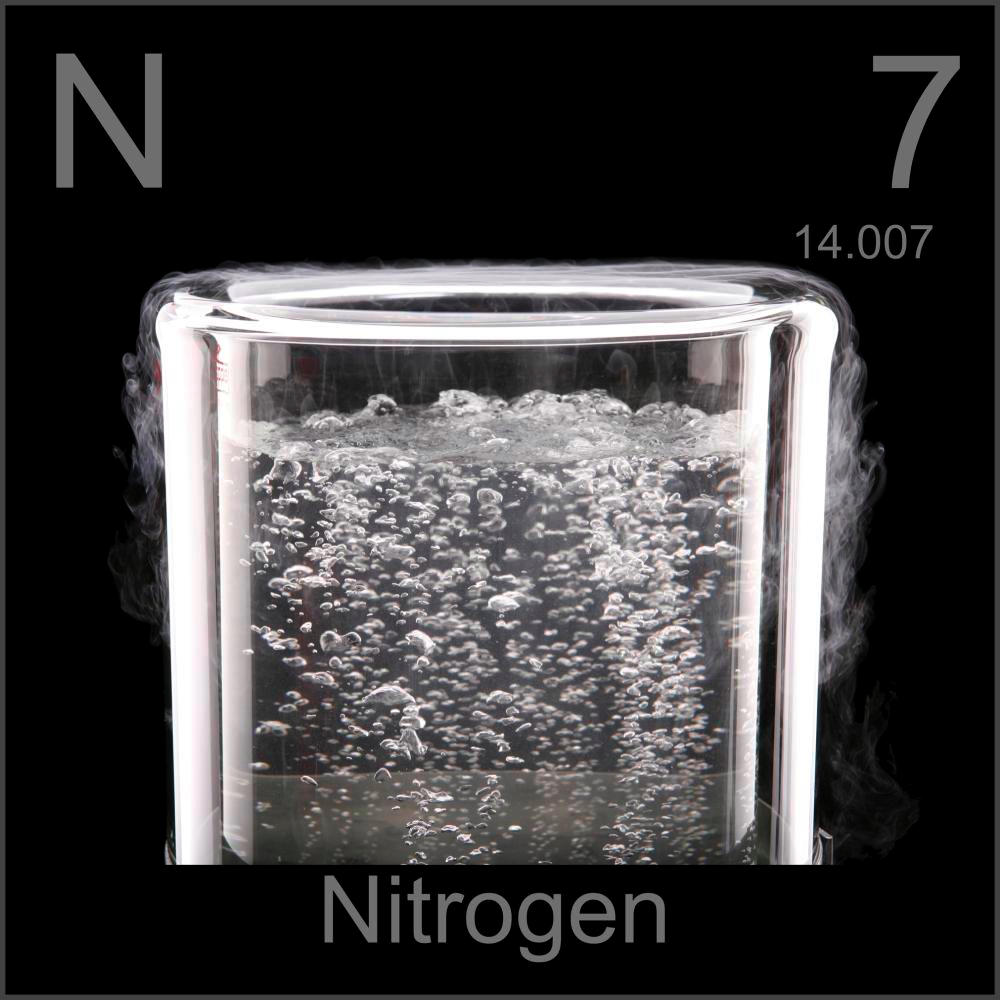
The inert gas of the week is.......NITROGEN!


Nitrogen's atomic number is 7, atomic weight is 14, and is a colorless non metal.  It's an inert gas because it doesn't undergo chemical reactions under a set of given conditions. This can be seen through the atmospheres. Nitrogen is a vital element in the Earth's atmosphere, making up 78% of the it.  However, other planets like Mars, make up much less (3%).  Nitrogen is an excellent element due to its abundance and cheap costs. Nitrogen is used for manufacturing fertilizers, plastics, dyes and explosives.  Liquid nitrogen can be used as a refrigerant for storing medical research and reproductive technology.

Findings in my kitchen: heh, I'm on that student budget, but I try to still eat healthy! In the fridge, there's greens (salad, celery, cucumber, kale) apples, bread, eggs, condiments, and chicken.  In the freezer is more colors! (vegetables) and frozen fish. Cupboards are bland with just spices and pasta. Overall, I think the colors could be more varying, but not bad!! I always like to have at least 2 bright ingredients in my meals.

I enjoyed all the articles from last week's lesson! Food is an important part in our every day lives, and knowledge is power. Some people try to disregard the facts about some of our foods, but if we're putting toxic chemicals into our body every day, we're going to see the negative outcomes. Food is definitely medicine.  Just as much as it can be harmful to you, eating the proper foods can heal you.  I believe that going a more natural route is a million times better than eating junk and trying to "fix" yourself after.

Tuesday, February 4, 2014

Week 4

The catalyst of the week is.......Titanium!


This element is number 22 in the periodic table, it's a transition mental and has the atomic mass of 48. The chemical symbol is Ti. This element is famous for not only being part of a song, but its greyish color and its strength.  Due to its strength, it is hard to extract and can therefore be expensive. Even though it is strong, it is also light! In comparison to the other elements, it is as strong as steel but also 45% lighter than steel.  Boats, airplanes, rockets, and whatever other material that needs strong, yet light metal can benefit from its uses. It's the 9th most abundant element in the earth's crust.


Thoughts on this week's discussion: 
I think science without social responsibility happened because everyone was too caught up on trying to "better" the world and make new discoveries.  Almost to the point where greed became a factor because new discoveries would help bring fame and money.  Unfortunately, the effects of what happens is usually the last thing many people think about- an afterthought.  My opinion of Green Chemistry as a social movement is that it is a step in the right direction, but we do have a long ways to go.  With anything, baby steps are needed to really make a positive direction, but I think more caution to be used. Especially with these products claiming how safe they are. With all this thought, I think we're far from being a green economy. However, at least it's becoming more of an effort to take a step in the right direction 

Friday, January 24, 2014

Week 3

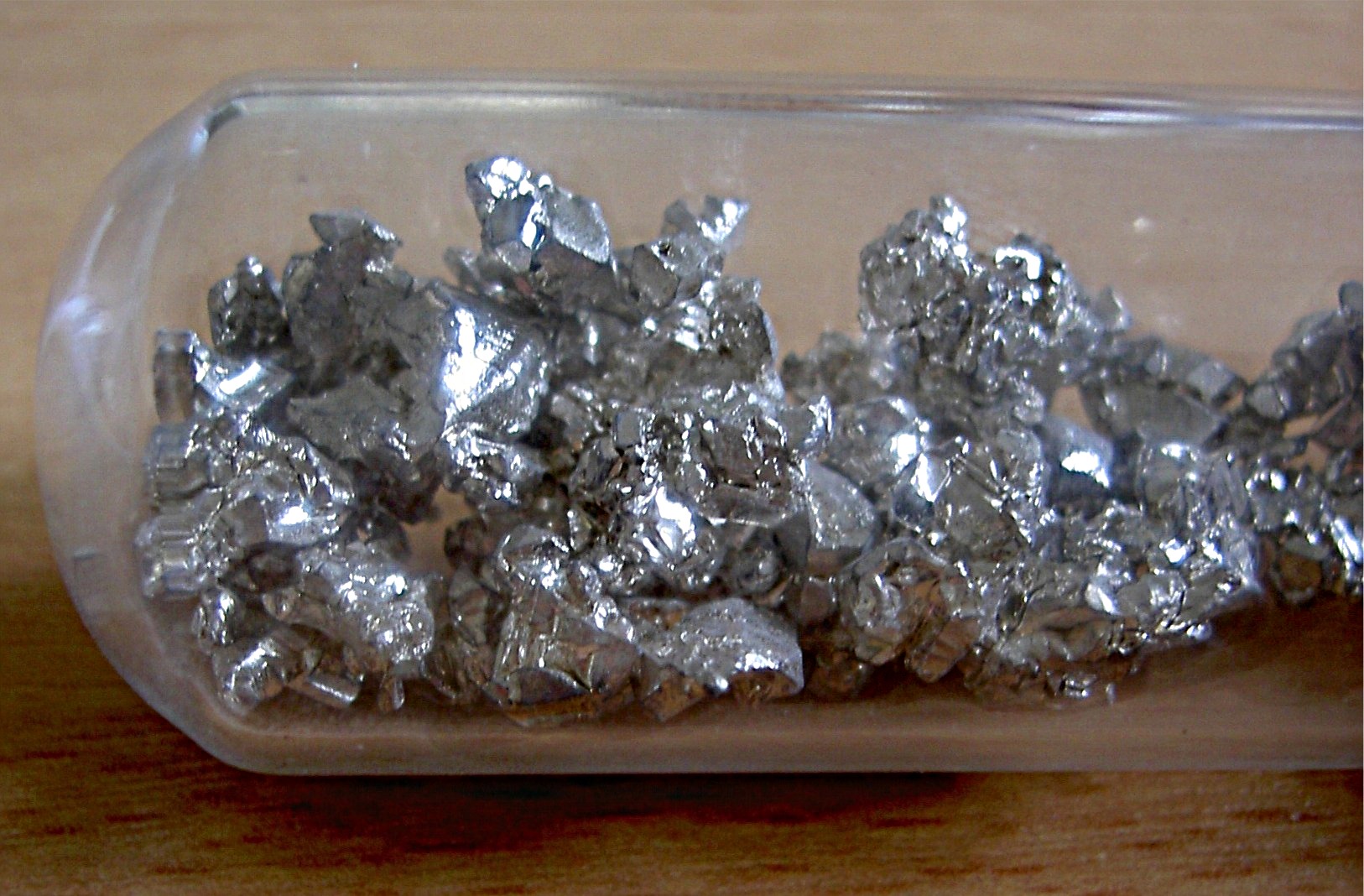
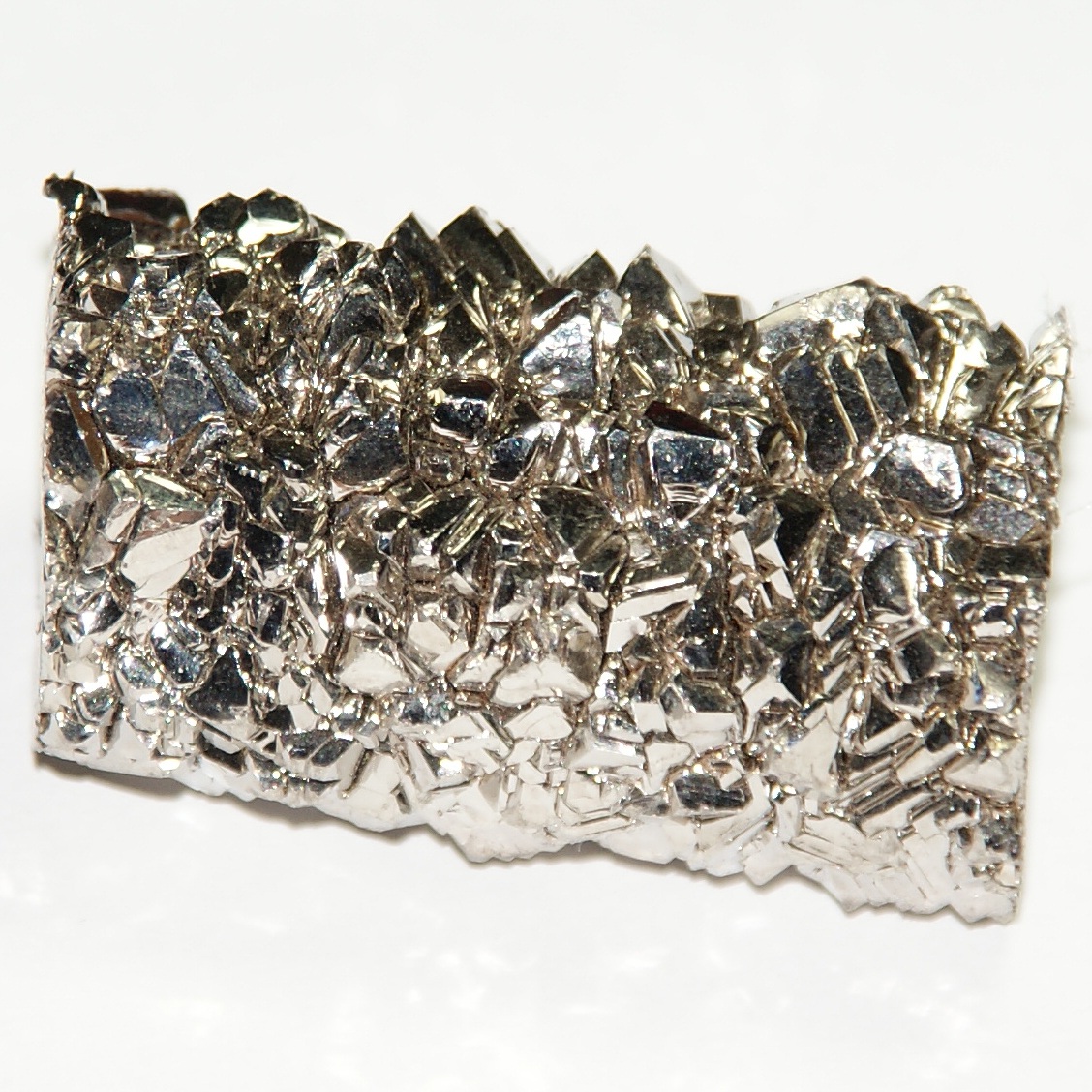
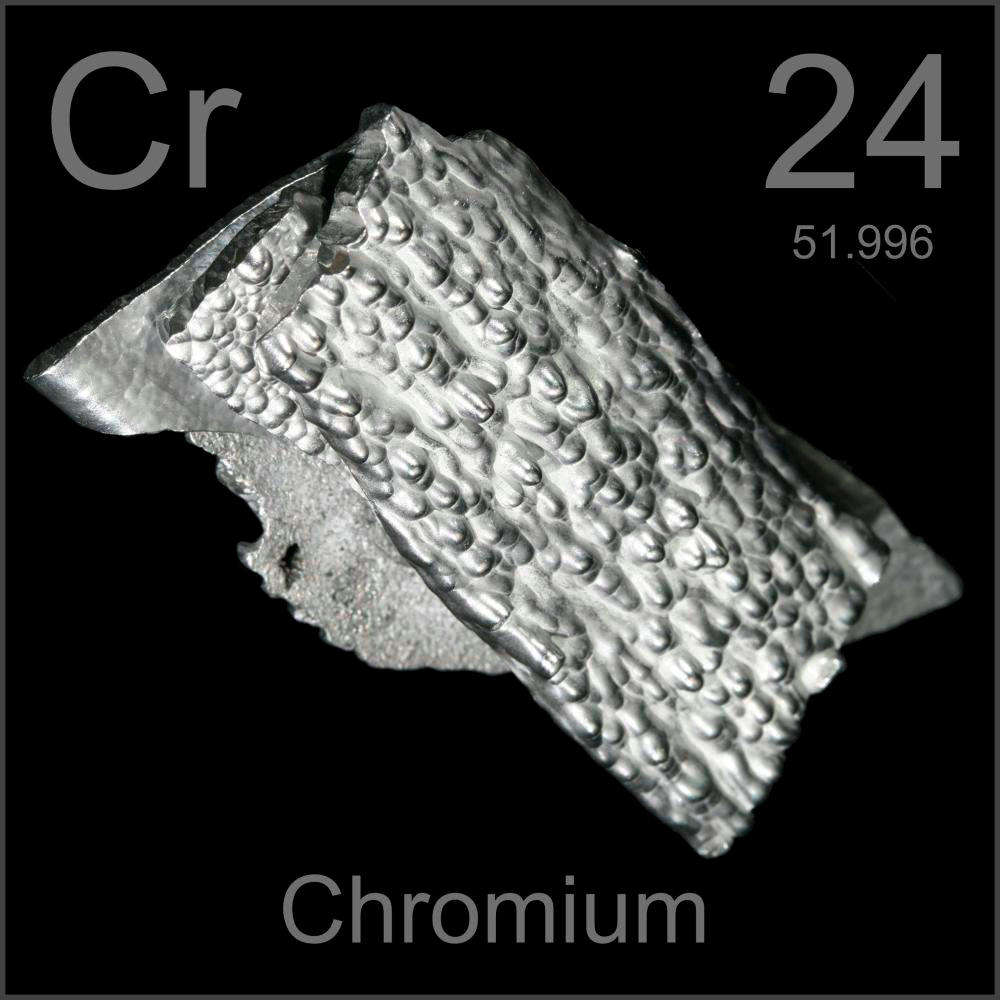
Transitional Metal of the Week: Chromium!


Look how shiny and lustrous it is! Chromium's atomic number is 24, with a mass of approximately 52. The melting point is an astonishing 1857.0 °C (2130.15 K, 3374.6 °F) and boiling point is 2672.0 °C (2945.15 K, 4841.6 °F). It was discovered in 1797 by
Louis Vauquelin.  Even though it's pretty to look out, the compounds are toxic. Adding chromium to stainless steel is how metals are able to resist corrosion. It is also used to prepare pigments, gives grass its green color, rubies its red and emeralds their green, by using it as a decorative and protective metal coating and as a catalyst.


Neptune's Medicine:
I found the article to be quite interesting! Utilizing the resources of the ocean is something that I wouldn't have thought of.  I also thought it showed how complex trying to make tests and formulas are, and the intense amount of work that goes into it.  Bill Fenical is definitely a dreamer, and he's done a lot of work that will hopefully make a huge change in the future of medicine and drugs.  

Green Chemistry:
I think this concept is awesome! When I think of chemicals, I think of toxic substances that occasionally can do good, but more likely it's harmful.  The ability to use sustainable products and biodegradable will help the earth in the long run. I like the 12 principles that Green Chemistry stands by. It shows that they're really trying to make a difference and just better everything as whole by prevention rather than having to do a clean up after a catastrophe happens.

Friday, January 17, 2014

Week 2

My element of the week is......... Oxygen!

It's atomic number 8, the chemical symbol is O and the atomic mass is 16.  It's part of the non-metal group. In it's natural state (room temperature), oxygen is in a gaseous form that is tasteless, colorless, and odorless.  The name oxygen derives from two greek words oxys and genes, which means "acid forming." It's the third most abundant element in the sun.  And without oxygen, humans would not be in existence since it comprises 2/3 of our body!

Discussion Question:
Are we too lax in our environmental controls?
Definitely! Look at all the instances that happen because of it. The most recent and major one being in West Virginia. The fact that 4-methyl-cyclohexane-methanol (MCHM) was  allowed to be dealt with in large quantities, regardless of the fact that most chemists and toxicologists have no idea what this chemical does and the impact it can have on human life. And why was the chemical plant so close to the water? The consequences are being taken lightly, with most officials brushing it off saying that it's "generally not likely to be associated with any adverse health effects." How reassuring.

 
http://www.chem.purdue.edu/gchelp/atoms/elements.html
 
A handy site to visualize how elements, compounds and mixtures look like in atomic form. The moving pictures of each one of them help because you can see how they move. Each of them are also broken down into a simplified list with bullet points to get the actions across. This helps rather than just reading paragraphs out of a book. 

Monday, January 13, 2014

Periodic Table


1. http://www.chemicalelements.com/

Great way to break down each element in the table and explain it's properties and structure!

2. http://www.funbrain.com/cgi-bin/pt.cgi?A1=s&A2=1&ACOMMON=1&submit=Play+Proton+Don

I liked how you could quiz yourself on the periodic table, and it's better than just using flashcards and saying the element. 

3. http://www.johnpratt.com/atomic/periodic.html

Nifty way to memorize the chart through pictures! I've always been a visual person, but specific pictures makes it that much easier. Even younger kids could use this!


All of these links are so useful!! If only I knew about these sites when I was taking chemistry in high school and undergrad. It would have made everything so much easier!

Chem Quiz

1. Classify the following as either a chemical or physical change. 
Burning wood: chemical 
Crushing a rock: physical
Dissolving sugar in water: physical
The rusting of iron: chemical
 I got all the above correct

2. Classify the following as to whether or not they are pure substances or mixtures. 
milk: pure mixture 
table salt: mixture
sugar: pure
steel: pure mixture
I chose pure for milk because it hasn't been tampered with, but it is indeed a mixture. Same with steel, I put pure but it is a combination of iron and carbon

3. A cup of black coffee is considered to be __?__ and a/an __?__ substance. 
(a) homogeneous�..pure
(b) homogeneous�..impure
(c) non-homogeneous�pure
(d) non-homogeneous�impure 
I chose homogenous because there is no milk or any other substance in it, but coffee itself is not pure.

4. The boiling of water is considered to be a __?__ change and the temperature at which water boils is considered to be a __?__ property. 
(a) chemical�..chemical
(b) chemical�..physical
(c) physical�..chemical
(d) physical�..physical

I chose physical and physical because there is no chemical change that is occurring. The water is still there and hasn't changed. 

About Me

Hi All!

My name is Noelle and I'm a first year ACCHS student. I was born and raised in Florida where I went to UF for my bachelors. I moved to Cali over the summer, and yes, JUST FOR SCHOOL! California licensing is different than any other states, so I figured I'd study here and then eventually go back to Florida after I'm finished with school. Still an adjustment, but I like it so far. But who knows what will happen or where I'll be in 4 years, it might just be too good to go back to the east coast =) I hope to specialize in women's health and fertility. I enjoy traveling, dancing, and listening/playing music. Here's to a good term!